
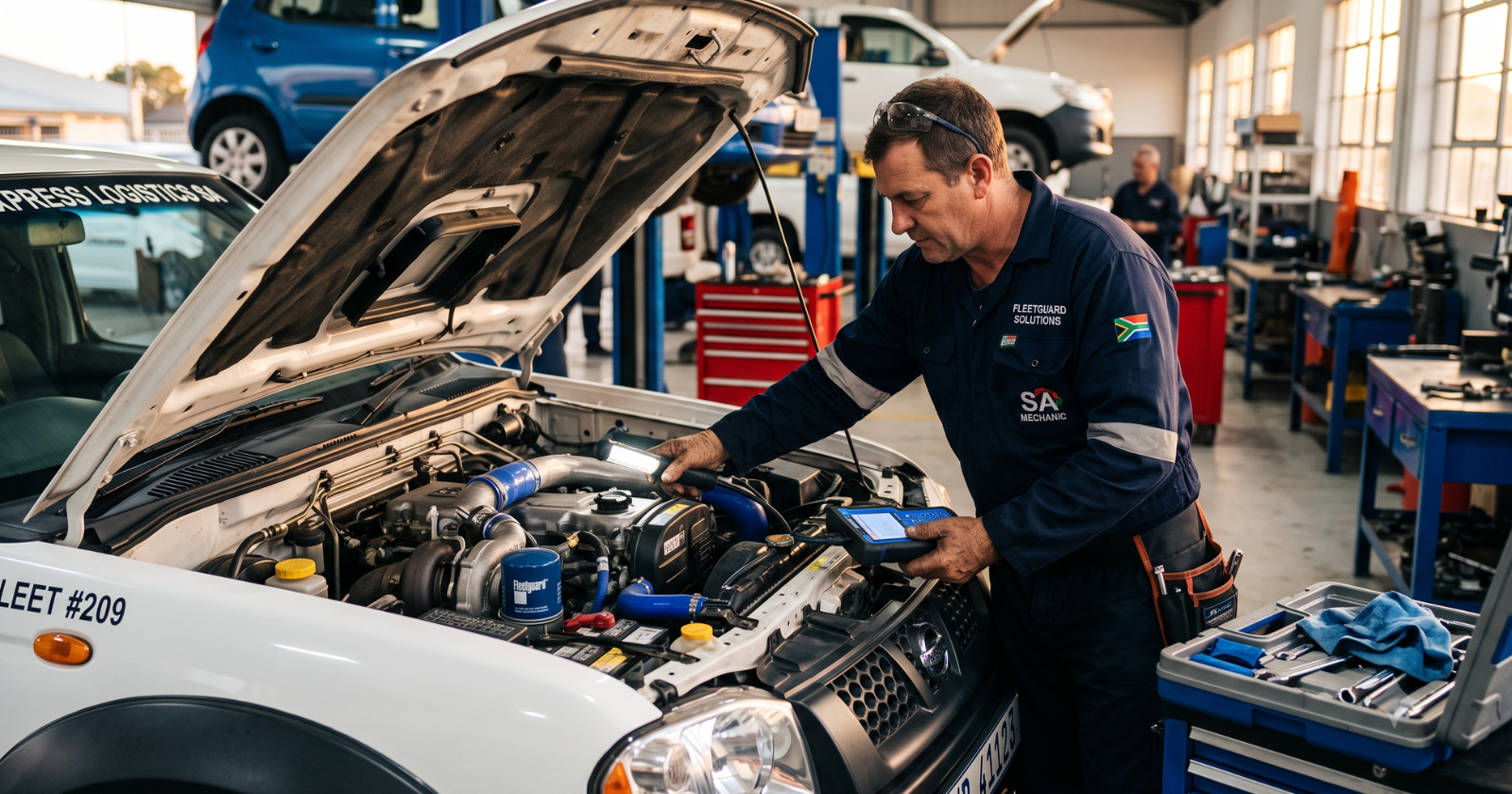
The Bottom Line on Fleet Maintenance: Keeping Your Commercial Vehicles on the Road and Earning
For any South African business that relies on transport—whether you run a fleet of three delivery bakkies or thirty heavy-duty logistics trucks—vehicles are not just assets; they are your primary revenue generators.
When a commercial vehicle breaks down, the cost is never just the price of the repair. You are paying for the tow truck, the idle driver's wages, the delayed deliveries, and most importantly, the damage to your company's reputation. In today's highly competitive, cost-sensitive environment, treating fleet maintenance as an afterthought is a fast track to shrinking profit margins.
Here is the candid truth about commercial fleet maintenance, why reactive repairs are draining your budget, and how structured servicing keeps your business moving.
The True Cost: Reactive vs. Preventative Maintenance
Many business owners fall into the trap of "running it until it breaks" to save cash in the short term. However, data from top fleet management companies in South Africa consistently shows that unplanned emergency breakdowns cost up to three times more than scheduled preventative maintenance.
Relying on a reactive strategy leads to:
-
Catastrophic Failures: A cheap, worn-out fan belt snapping on the N1 can easily lead to a cracked cylinder head and a massive engine overhaul bill.
-
Extended Downtime: Emergency repairs mean waiting days for parts and workshop space, taking your vehicle out of the revenue cycle.
-
Safety and Liability Risks: If a poorly maintained commercial vehicle causes an accident, your business faces severe legal liability and skyrocketing insurance premiums.
What Does a Professional Fleet Maintenance Schedule Look Like?
A robust fleet maintenance plan relies on structured intervals based on mileage (kilometres), engine hours, or time—whichever comes first.
| Maintenance Tier | What It Involves | Frequency |
| Daily Driver Inspections | A quick walkaround by the driver to check tyre pressure, oil/water levels, and basic lighting before leaving the depot. | Daily |
| Minor Preventative Service | Oil and filter changes, fluid top-ups, brake inspections, and greasing of suspension components. | Every 10,000 km to 15,000 km (or per OEM spec) |
| Major Comprehensive Service | Replacement of spark plugs/glow plugs, air and fuel filters, gearbox oil, differential fluid, and a deep mechanical diagnostic. | Every 30,000 km to 45,000 km |
| Lifecycle Replacements | Swapping out timing belts, water pumps, clutches, and heavy suspension wear-and-tear items before they fail. | Usually between 90,000 km and 120,000 km |
How Telematics is Changing Fleet Servicing in 2026
Modern fleet maintenance has moved far beyond the traditional sticker on the inside of the windscreen. Today, successful South African fleets use advanced telematics and CAN bus data to track vehicle health in real-time.
Integrating tracking software with your maintenance schedule provides distinct advantages:
-
Real-Time Diagnostics: Workshop managers receive immediate alerts for engine fault codes, overheating, or low oil pressure while the vehicle is still on the road.
-
Driver Behaviour Tracking: Harsh braking, excessive idling, and aggressive cornering accelerate wear and tear. Identifying these habits allows you to train drivers and reduce maintenance frequency.
-
Automated Scheduling: The system automatically flags when a vehicle is due for a service based on live odometer readings, allowing you to plan downtime efficiently without disrupting logistics.
-
Accurate Record Keeping: Maintaining flawless digital service histories is essential for valid warranty claims, insurance requirements, and maximizing resale value (not to mention keeping your SARS vehicle expense logs in perfect order).
Find an RMI-Approved Commercial Workshop
Commercial vehicles endure significantly harsher conditions than private passenger cars. They carry heavy loads, sit in stop-and-go traffic, and rack up massive mileage. Therefore, they require technicians who understand heavy-duty mechanics.
Use our Auto Repair Directory to find dedicated, RMI-approved (Retail Motor Industry) commercial workshops. Look for service centres that offer:
-
Priority Fleet Booking: Fast-tracked servicing to minimize your vehicle's time off the road.
-
Account Facilities: Streamlined invoicing and 30-day corporate accounts for easier cash flow management.
-
After-Hours Support: Night or weekend servicing so your vehicles can be repaired while your business sleeps, ensuring they are ready to roll by morning.
Like the article?
Join the conversation!
This is a space for respectful conversation. Let's keep all comments productive and inclusive.