
Brake and Clutch Repairs: Critical Warning Signs You Should Never Ignore
When you are navigating stop-and-go traffic on the N1 or descending a steep pass, your vehicle's stopping power and transmission control are all that stand between you and a catastrophic accident. Brakes and clutches are high-friction, heat-generating components that are specifically designed to wear out over time.
Many South African motorists try to push these components to the absolute limit to save a few Rands, but ignoring the warning signs is a dangerous and ultimately more expensive game. Here is the straightforward truth about how your brakes and clutch work, the signs that they are failing, and what a professional repair entails.
Brakes: It Is Not Just About the Pads
The most common misconception in brake maintenance is that a "brake job" only involves slapping on a new set of brake pads. In reality, your braking system is a complex hydraulic network.
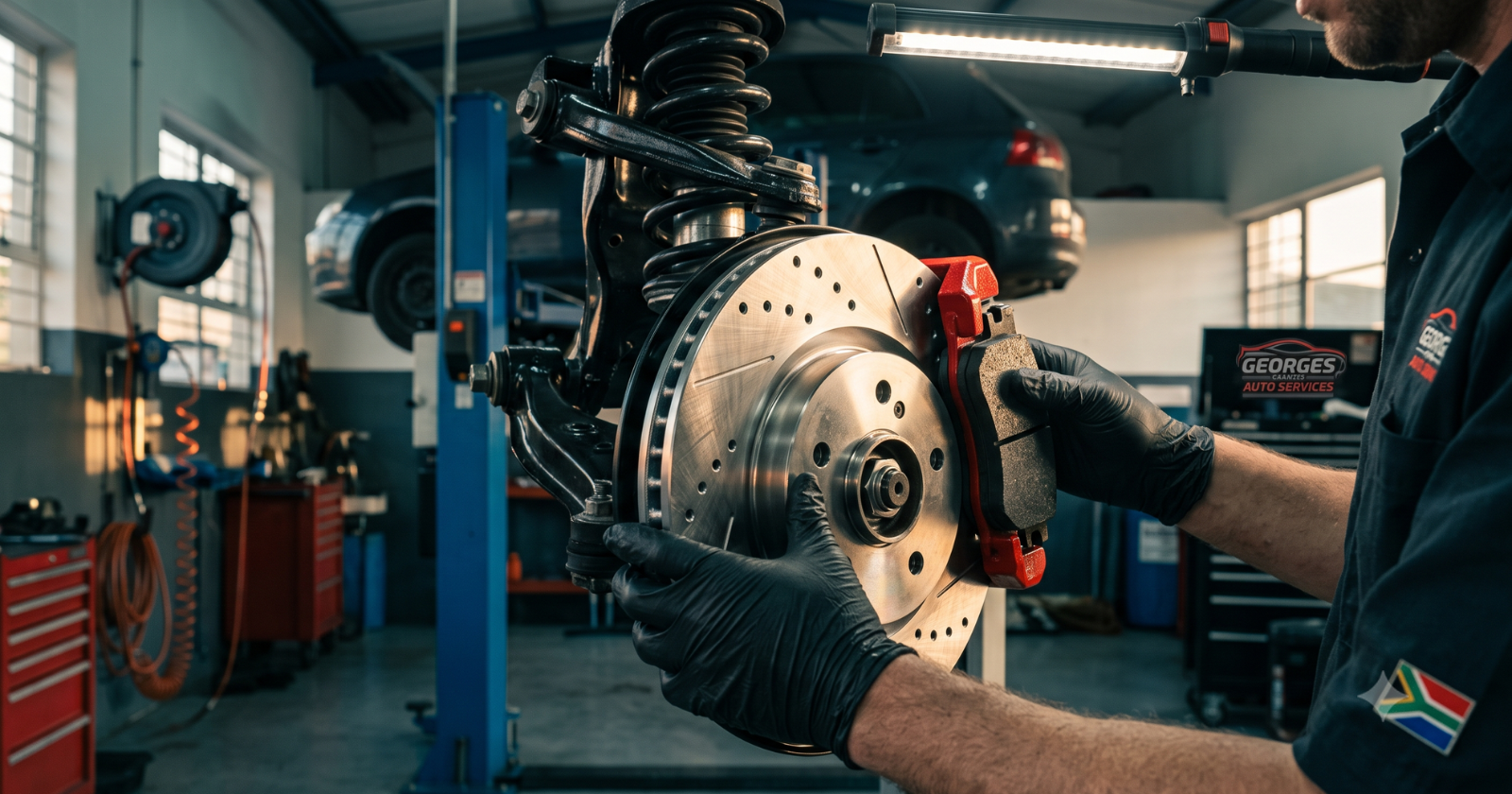
When you press the brake pedal, brake fluid forces the brake calipers to clamp the pads against the spinning metal brake discs (rotors). If the discs are warped, scored, or excessively thin, new brake pads will not sit flush. This severely compromises your stopping distance and will ruin the new pads in a matter of weeks.
Signs Your Brakes Need Immediate Attention
-
High-Pitched Squealing: Modern brake pads have built-in metal wear indicators that intentionally squeal when the friction material gets critically low.
-
Harsh Grinding Metal: If the squeal turns into a deep grinding noise, you have completely worn through the pad and the metal backing plate is actively gouging your brake discs. This drastically increases the repair cost.
-
Steering Wheel Shudder: If your steering wheel violently vibrates when braking at highway speeds, your brake discs are warped from excessive heat and need to be skimmed or replaced.
-
A "Spongy" Brake Pedal: If the pedal sinks to the floor before the car slows down, you likely have air or moisture in your brake fluid lines, or a failing master cylinder.
Clutches: The Heart of the Manual Gearbox
Whether you drive a heavy-duty delivery bakkie or a sporty hatchback, a manual transmission relies on the clutch to engage and disengage the engine's power from the wheels. The clutch takes an immense amount of physical abuse, especially on South Africa's steep hills and congested urban roads.
A clutch is not a single part; it is a system. A standard replacement involves fitting a complete Clutch Kit, which includes the friction plate, the pressure plate, and the release bearing.
Signs Your Clutch is Failing
-
Slipping: The most common symptom. You accelerate, the engine revs climb loudly, but the car barely gains speed. This means the friction material on the clutch plate is worn entirely smooth.
-
A High "Bite" Point: If you have to lift your foot almost entirely off the pedal before the car starts moving, the clutch is reaching the end of its lifespan.
-
A Foul, Burning Smell: An acrid, burning-paper smell when driving up a hill or reversing under load indicates the clutch is overheating and slipping.
-
Difficulty Selecting Gears: If it is hard to push the gear lever into first or reverse while stationary, the clutch pressure plate or release bearing is likely failing to disengage fully.
Quick Diagnostic Guide
| Symptom | Component | Likely Culprit | Danger Level |
| Pulsating Brake Pedal | Brakes | Warped or uneven brake discs. | Moderate |
| Grinding Noise when Braking | Brakes | Pads worn down to the metal. | Critical (Do not drive) |
| Spongy/Sinking Brake Pedal | Brakes | Old, degraded brake fluid or hydraulic leak. | Critical (Do not drive) |
| Engine Revs but No Acceleration | Clutch | Severely worn clutch friction plate. | High (Will leave you stranded) |
| Shuddering when Pulling Away | Clutch | Warped flywheel or oil leak on the clutch plate. | Moderate |
The Professional Repair Process
Whether you need brake or clutch work, precision is non-negotiable.
For brakes, a professional RMI-approved technician will never just fit new pads and send you on your way. They will measure the thickness of your brake discs with a micrometer. If the discs have enough thickness left, they will be "skimmed" on a lathe to create a perfectly flat, fresh surface. If they are too thin, they must be legally replaced. They will also test the boiling point of your brake fluid to see if a flush is required.
For clutches, the gearbox must be completely separated from the engine—a labor-intensive job that often takes a full day. A reputable workshop will always inspect the dual-mass flywheel (if equipped) and the rear main engine oil seal while the gearbox is removed, saving you from paying for the same labor twice down the road.
Find an RMI-Approved Fitment Centre
Because brakes and clutches are critical safety items, repairs should never be attempted by an unqualified backyard mechanic.
Use our Auto Repair Directory to find trusted, RMI-approved (Retail Motor Industry) and MIWA-registered workshops that specialize in brake and clutch fitment. Accredited specialists guarantee their workmanship and only use high-quality, OEM-approved friction materials that keep you safe and your vehicle running smoothly.
Like the article?
Join the conversation!
This is a space for respectful conversation. Let's keep all comments productive and inclusive.